
Engineering teams built around your needs — from solo engineers to full-scale squads.
SOFTWARE DEVELOPMENT Custom Software Development Web Application Development Backend Development Frontend Development E-commerce Development MVP Development SaaS Development UX/UI Design AI & MOBILE Machine Learning Deep Learning Computer Vision Natural Language Processing Agentic AI LLM Integration iOS App Development Android App Development Cross-Platform App Development CLOUD, QA & DATA Cloud Migration Cloud Architecture DevOps & CI/CD Cybersecurity Software Testing & QA Automation Testing Business Intelligence Big Data CRM All Services → OUR PRODUCTSSell more in every chat Support that never sleeps Every delivery in the loop Campaigns people answer
Product offers, cart reminders and checkout — right inside Viber, where your customers already are.
Boost my salesPrecise Microclimate Remote Control Full Traceability Autonomous Operation
Automated management of temperature, humidity, lighting, and ventilation for reliable breeding of beneficial bioagents.
Request a DemoWe've delivered 60+ projects across 11+ sectors. Experience in your industry? We have it.
Agriculture Banking Fintech Insurance Healthcare Real Estate Logistics IoT AI Cybersecurity Blockchain All Industries → Careers Technologies Our Work BlogInsectarium.
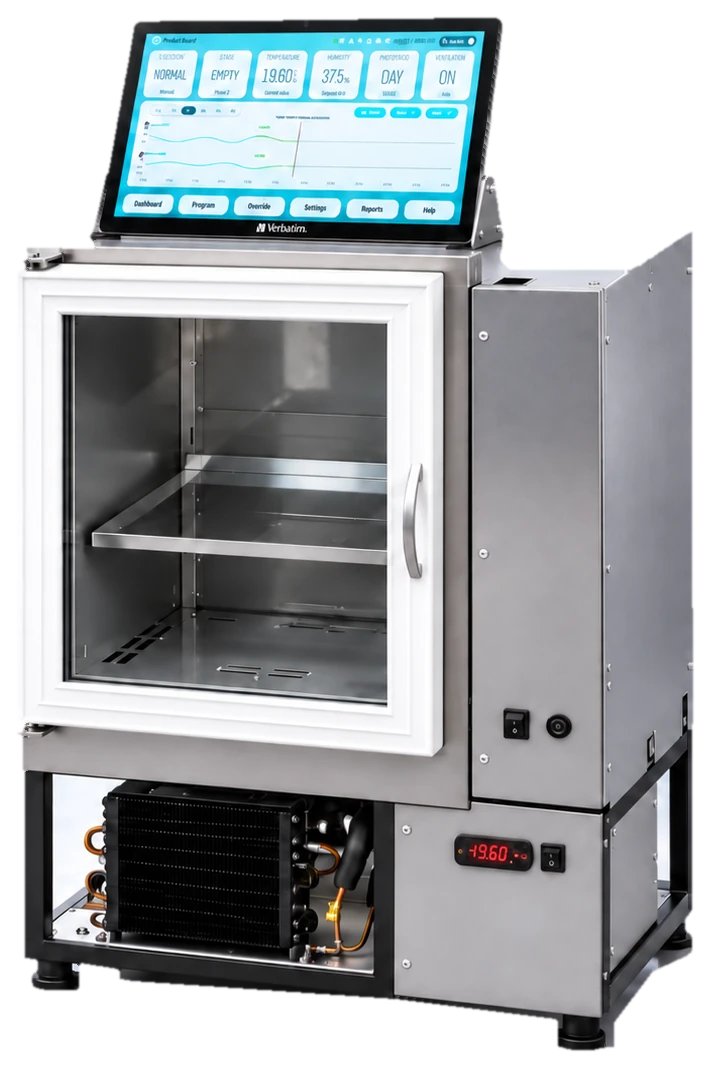
Insectarium is a modular, IoT-enabled system that simulates and controls precise environmental conditions for rearing bio-agents, from smart chamber hardware to a cloud platform. The result: a TRL-7 prototype.
the European Union Programme Competitiveness and Innovation
in Enterprises
 AgriTech · Biological pest control
Digital agriculture for chemical-free pest control.
The Insectarium project is an EU-funded innovation initiative in Bulgaria, focused on developing advanced hardware and software systems for the rearing of biological control agents (bio-agents) as sustainable alternatives to chemical pesticides.
The project brings together researchers, engineers, and agritech experts to design a scalable solution that supports both scientific research and industrial farming applications.
TRL 7 Bulgarian / EnglishPrecise conditions for every growth phase.
The goal was to build a modular, IoT-enabled system that could simulate and control precise environmental conditions for insects across different growth phases. The system needed to support:
01A cloud-based web platform for centralized management, user roles, reporting, and data analysis.
02Smart hardware units (Insectariums) with HMI dashboards for local monitoring and control.
03Middleware for secure communication between devices and the cloud.
04Recipe creation tools to define rearing programs (temperature, humidity, light cycles, feeding, etc.) with versioning and overrides.
05Bilingual support (Bulgarian/English) for broader adoption in research and farming.
Where biology meets software.
Key challenges included:
01Translating biological processes (insect life cycles, e.g., trichogramma, ladybugs) into programmable “recipes.”
02Balancing local autonomy (devices working without constant internet) with cloud synchronization.
03Designing a flexible HMI usable by both scientists and farm operators.
04Coordinating between diverse stakeholders (designers, developers, biologists, agronomists).
Device, middleware and cloud, delivered as one system.
Generic Soft designed and built the complete system across hardware, cloud, middleware and user experience.
Device, middleware and cloud each have their own responsibility and can be developed and tested separately, so the chamber keeps maintaining the microclimate even when the upper levels drop out.
Hardware & HMI: embedded interface, local override mode and secure device pairing
Cloud web platform: multi-tenant dashboard, recipe builder, reporting and fleet management
Middleware & communication: message broker, secure registration and heartbeat protocol
Design & UX: wireframes, interactive prototypes and user journeys
Four workstreams, one platform.
Hardware & HMI • Embedded HMI interface displaying real-time sensor data (temperature, humidity, CO₂, camera feed). • Local override mode with logged actions for traceability. • Pairing mechanism (device ID + code) to securely connect units to the cloud. Cloud Web Platform • Multi-tenant dashboard to manage organizations, devices, and users. • Recipe builder for creating/editing rearing programs with steps, profiles (day/night cycles), and parameter constraints. • Reporting and analytics (logs, environmental data, recipe outcomes). • Device fleet management (view all insectariums, expand details, push new recipes). Middleware & Communication • Message broker ensuring reliable synchronization between devices and cloud. • Secure pairing and registration flows with session/expiry handling. • Heartbeat/handshake protocol for device status monitoring. Design & UX • Wireframes and interactive prototypes for both HMI and cloud web platform. • User journeys covering device pairing, recipe management, reporting, and override cases.Well inside tolerance.
During testing, the prototype was measured against independent reference instruments and put through network and power outages.
TRL 7 Prototype demonstrated in an operational environment ≤ 0.4 °C Temperature deviation (allowed ±1.0 °C) ≤ 1.5 pp Humidity difference (allowed ±5) ~30 s Automatic cloud reconnection after a network outage Device Layer 1Industrial controller with sensors and actuators keeps the microclimate running, even offline.
Middleware Layer 2Local storage and messaging that sync data to the cloud once the connection returns.
Cloud Layer 3Web platform for organisations, roles, recipes, reports and the full device fleet.
After a power cut, the system resumes from the correct phase of the program instead of starting over.
A bridge between biotechnology and digital agriculture.
The result is a TRL-7 level prototype that demonstrates how advanced automation and IoT can be applied to biological control.
What it enables Researchers can now standardize and replicate insect rearing experiments with programmable recipes. Farmers and institutions gain scalable, chemical-free pest management solutions. The system enables data-driven decisions through logs, reports, and environmental monitoring.This innovation positions the project as a bridge between biotechnology and digital agriculture, with potential for commercialization across Europe.